1
/
of
10
CoralLimeFloral
Ru-Style Celadon Foo Dog Sculpture | Celadon Guardian Lion | Chinese Art Decor | Scholar’s Studio Ornament | Ceramic Home Decor
Ru-Style Celadon Foo Dog Sculpture | Celadon Guardian Lion | Chinese Art Decor | Scholar’s Studio Ornament | Ceramic Home Decor
Regular price
£496.00 GBP
Regular price
Sale price
£496.00 GBP
Unit price
/
per
Taxes included.
Couldn't load pickup availability
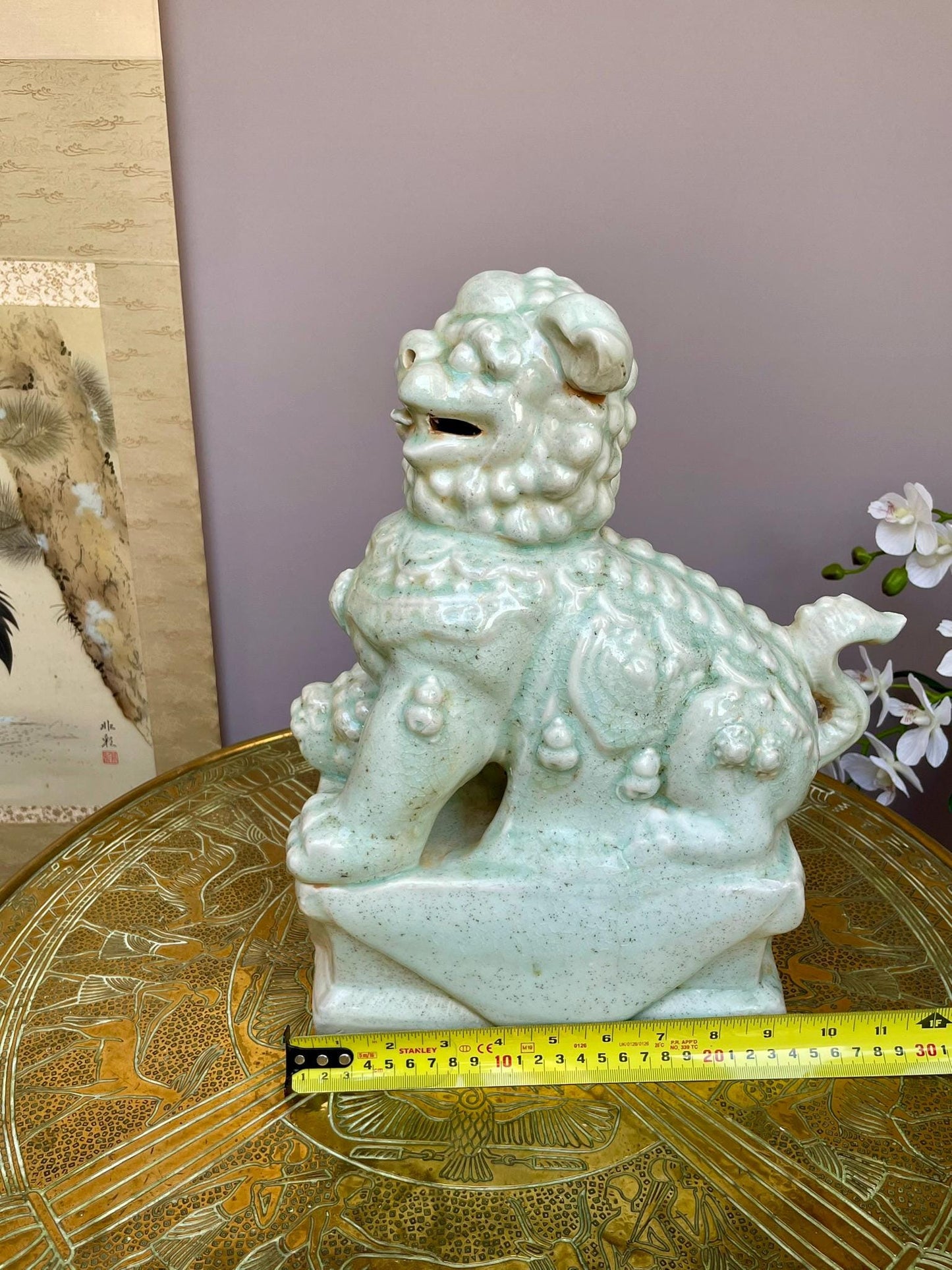
Bring classical East Asian elegance into your home with this beautifully crafted Ru-style celadon guardian lion (Foo Dog) sculpture, inspired by the refined aesthetics of Northern Song–era ceramic traditions. With its soft, jade-like glaze and sculpted lion form, this piece evokes a timeless sense of protection, calm, and artistic refinement.
✨ Ru-Style Inspiration — A Tribute to Song-Dynasty Ceramic Aesthetics
Ru ware from the Northern Song dynasty is celebrated for its delicate celadon tones, smooth texture, and quiet elegance. This modern piece draws inspiration from that legacy, featuring:
A soft celadon glaze reminiscent of “sky after rain” blue
Natural crackle patterns typical of classic Ru-style ceramics
A smooth, jade-like surface favored in traditional scholar culture
The visual softness of the glaze complements the strength and presence of the guardian lion form, creating a harmonious balance of power and grace.
🦁 The Cultural Roots of the Guardian Lion (Foo Dog)
1. Introduced Through Buddhism and Adopted in Classical Chinese Art
Lions do not originate in East Asia; they came into cultural symbolism through Buddhist traditions. Over time, they became widely recognized as guardian figures representing:
Protection and warding off negative forces
Authority and dignity
Good fortune and auspicious energy
By the Song dynasty, small lion sculptures were common in artistic, spiritual, and scholarly settings.
2. Historically Inspired Functions
Throughout ancient and classical periods, lion-shaped sculptures often served functional or symbolic purposes:
Finials and handles on incense burners
Paperweights on scholar’s desks
Protective symbols in temples, homes, and studios
Thus the lion figure held both practical and spiritual significance.
3. Evolution Into Decorative Art
In later centuries, Ru-style pieces and lion motifs became popular in scholar’s studios as expressions of:
Artistic taste
Appreciation for historical craftsmanship
Cultural continuity
Lion sculptures became cherished decorative objects representing refinement and personal meaning.
💎 Why Scholars Admired Lion Sculptures
Historically inspired scholars and collectors valued lion figures for their symbolism:
Protection and strength
Integrity and upright character
Auspicious presence
A thoughtful, expressive object for a study or work space
The combination of a powerful animal form with a serene celadon glaze creates a poetic, contemplative aesthetic.
✨ Piece Features
Celadon glaze in Ru-style tradition
Sculpted guardian lion (Foo Dog) seated on a pedestal
Natural crackle pattern throughout the glaze
Ideal as a decorative accent in living rooms, entryways, or offices
Symbolic gift representing protection and good fortune
Approximate height: 40 cm (as shown in the photo)
🏡 A Beautiful Decorative Accent
Perfect for:
Asian-inspired interior décor
Ceramic art collectors
Scholar’s desks or creative studios
Feng shui or symbolic displays
Adding a serene statement piece to modern or traditional spaces
This celadon lion offers a sense of calm strength and cultural elegance wherever it is placed.
Share