1
/
of
10
CoralLimeFloral
Large Blue and White Porcelain Meiping Vase – Classic Plum Vase Shape – Hand-Painted Floral Motifs Traditional Tall Collector Display Piece
Large Blue and White Porcelain Meiping Vase – Classic Plum Vase Shape – Hand-Painted Floral Motifs Traditional Tall Collector Display Piece
Regular price
£698.00 GBP
Regular price
Sale price
£698.00 GBP
Unit price
/
per
Taxes included.
Couldn't load pickup availability
Large Blue-and-White Meiping Vase — A Classic Plum-Blossom Silhouette with Elegant Hand-Painted Motifs
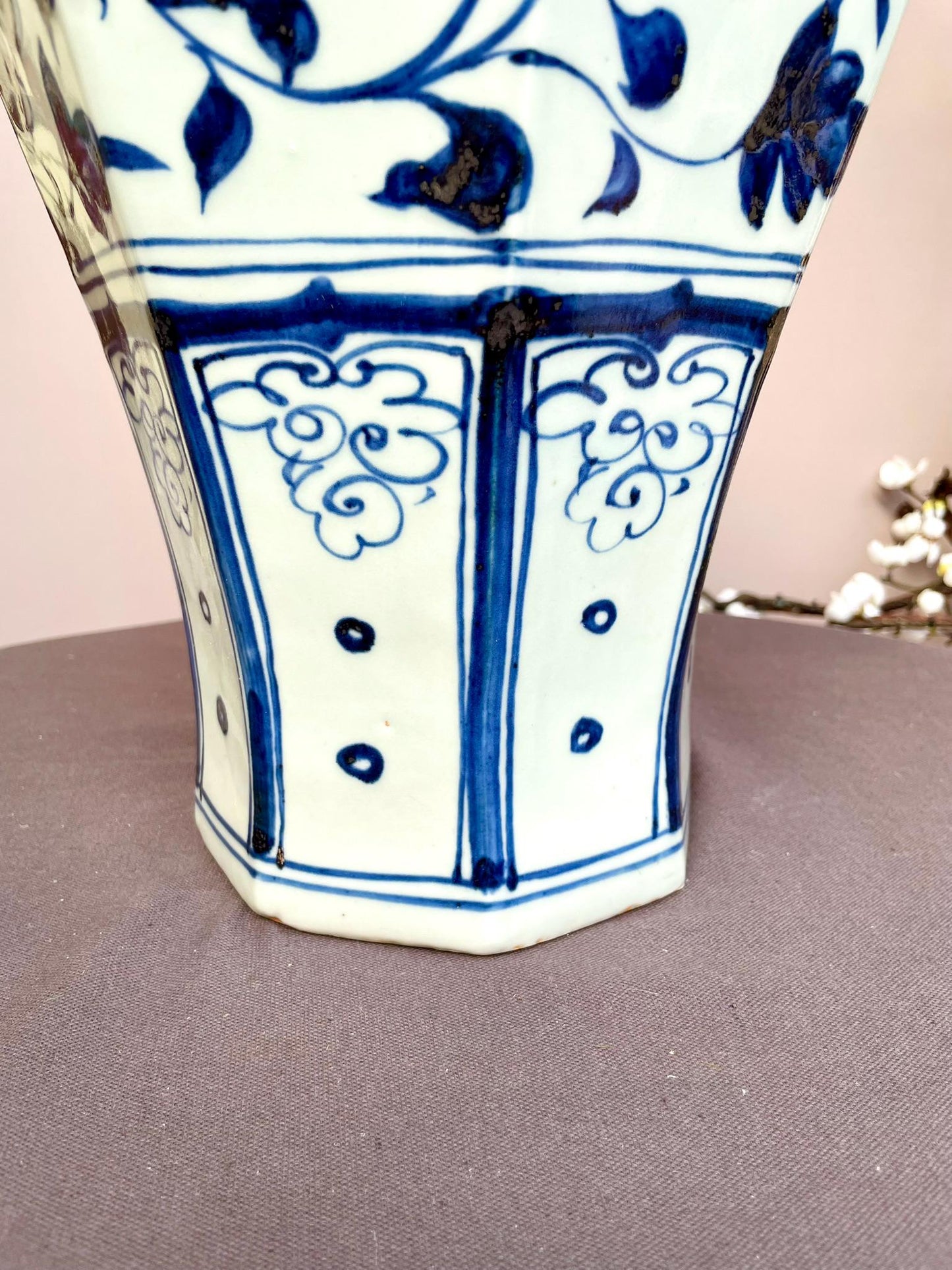
This exceptional large blue-and-white meiping vase showcases one of the most iconic shapes in Chinese ceramic history. Standing tall with a broad, rounded shoulder, gently tapering body, and refined narrow mouth, this piece represents the classical “plum vase” form—originally created to hold a single blossoming branch, and later treasured as an elegant display object in scholars’ studios and imperial halls.
The hand-painted cobalt decoration features flowing foliage, floral scrolls, and layered botanical motifs—each brushstroke captured beneath a soft, luminous glaze. This particular piece belongs to the larger, more stately category of meiping, giving it a strong visual presence suitable for entryways, console tables, mantel displays, or gallery settings.
✨ The Meiping Vase: Its Shape, Origin, and Evolution
The Meiping Shape — A Vessel Born from Nature and Literature
The meiping (“plum vase”) first appeared during the late Tang period. Its early form—narrow mouth, short neck, full shoulder, and small foot—was designed to store wine and other liquids. But its silhouette also resembles a plum bud just beginning to open, which inspired scholars to use it to display a single branch of plum, pine, or winter blossoms.
This symbolic connection soon made the meiping a favorite among literati. To them, the vase represented:
Purity and restraint
Strength in winter (the virtue of the plum blossom)
Refined, cultivated taste
Placed beside books, inkstones, or an incense burner, the meiping became a hallmark of the scholar’s studio.
From Functional Vessel to Decorative Masterpiece
Over the centuries, the meiping evolved from practical storage to pure ornament:
Tang → Early Yuan: primarily a wine vessel
Yuan → Early Ming: dual function—both practical and decorative
Ming (Yongle, Xuande) → Qing Dynasty: fully transformed into a display object appreciated for its beauty and symbolism
By the Qing dynasty, emperors such as Kangxi, Yongzheng, and Qianlong actively commissioned meiping vases for palace decoration. Some favored elegant, slender forms; others preferred powerful, full-shouldered silhouettes inspired by earlier dynasties.
Blue-and-White Meiping — A Symbol of Imperial Aesthetic
With the rise of blue-and-white porcelain in the Yuan dynasty, the meiping shape gained even greater prestige. Imported cobalt pigment allowed artists to create vivid underglaze decoration, and Jingdezhen kilns perfected the technique.
Across dynasties, blue-and-white meiping were admired for:
Balanced proportions
Graceful plum-bud silhouette
Deep cobalt painting—floral, lotus, scrolls, or landscape motifs
This tradition is reflected in the vase offered here—where clean lines, bold shoulders, and refined hand-painted ornament combine into a timeless decorative statement.
✨ A Larger, Statement-Sized Meiping
This piece belongs to the larger category of meiping, giving it a presence often associated with:
Reception rooms
Library or study décor
Altar or console arrangements
Collectible ceramic displays
Its size allows it to stand alone as a focal point or to complement other blue-and-white pieces in a curated interior setting.
✨ Suggested Use in Modern Interiors
Display it as a sculptural standalone piece
Pair with a single seasonal branch (plum, magnolia, pine, cherry)
Use as part of a blue-and-white ceramic grouping
Ideal for collector shelves, foyers, or luxury home décor
Its traditional form harmonizes beautifully with minimalist, classic, vintage, or Asian-inspired interiors.
Share